Choosing the Right Mooring Rope: Why the Material Decision Matters
For commercial vessel operators working out of ports such as Walvis Bay, Durban, Richards Bay, Maputo, and Beira, mooring rope selection is a safety-critical procurement decision. The wrong material can lead to premature rope failure, increased snap-back risk, excessive vessel movement during cargo operations, or avoidable replacement costs.
Two synthetic fibre types consistently come up in commercial mooring discussions: polysteel and polyester. Both are widely available and each has legitimate application areas — but they are not interchangeable. This guide outlines the key differences and provides practical guidance for selecting the right material for your vessel type and operating environment.
What Is Polysteel Rope?
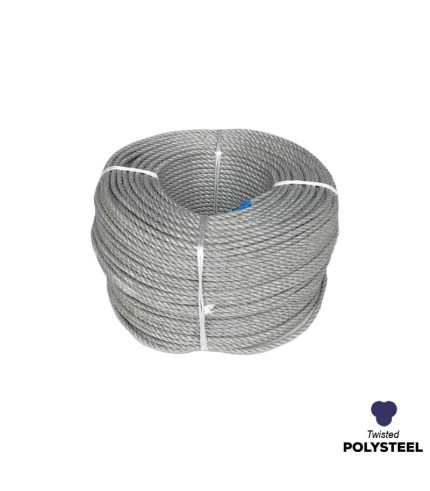
Polysteel rope is a high-tenacity synthetic rope manufactured from a blend of polypropylene and polyethylene fibres. The fibres are fibrillated — split and interlocked during production — which significantly increases tensile strength relative to standard polypropylene rope. Size for size, polysteel is approximately 40% stronger than conventional polypropylene and considerably stronger than traditional natural fibre ropes.
Key physical characteristics of polysteel include:
- Buoyancy: Polysteel floats, making it inherently resistant to propeller fouling in certain mooring configurations.
- Lightweight: Its low density makes handling easier, particularly in manual line-handling operations at smaller or less mechanised berths.
- UV and chemical resistance: Quality polysteel rope incorporates UV stabilisers, extending service life in high-sunlight environments.
- Elongation at break: Approximately 18%, which provides limited but measurable shock absorption.
- Low moisture absorption: Polysteel does not absorb water, maintaining its rated breaking load in wet conditions.
What Is Polyester Mooring Rope?
Polyester is one of the most widely specified synthetic fibre materials for commercial vessel mooring worldwide. It is used extensively on bulk carriers, container vessels, tankers, and general cargo ships. Its adoption across major shipping fleets is driven by a combination of durability, controlled elongation, and reliable performance under repetitive cyclic loading.
Key physical characteristics of polyester mooring rope include:
- Superior UV resistance: Polyester outperforms polypropylene-based ropes in long-term UV stability, making it well suited to tropical and subtropical coastal environments.
- Controlled working stretch: Polyester offers moderate elongation that allows it to absorb and recover from surge loads without the extreme snap-back energy of lower-stretch materials.
- Excellent abrasion resistance: Particularly relevant in port environments where lines contact rough dock surfaces, fairleads, and bollards.
- No buoyancy: Polyester sinks, which reduces interference with risers and underwater infrastructure in fixed mooring or FPSO configurations.
- Cyclic fatigue performance: Polyester maintains structural integrity under repeated loading cycles — a key requirement for vessels at berth in tidal or high-traffic port environments.
Polysteel vs Polyester Mooring Ropes: Head-to-Head Comparison
Strength and Load Capacity
Polysteel achieves a higher tenacity than standard polypropylene, but polyester generally offers greater overall breaking load per diameter in direct comparisons with polysteel. For vessels where the mooring equipment design is governed by IMO MSC.1/Circ.1619 or OCIMF MEG4 minimum breaking load requirements, polyester's strength characteristics are typically better documented and certified for compliance purposes.
Elongation and Shock Absorption
This is one of the most operationally significant differences between polysteel vs polyester mooring ropes. Polysteel exhibits low working elongation — useful for maintaining line position, but less capable of absorbing dynamic surge loads generated by passing vessels, wind gusts, or swell. Polyester's moderate elongation means it can absorb and dissipate energy more effectively, reducing peak loads transmitted to bollards, deck fittings, and hull structures. For commercial vessels moored in exposed berths or during adverse weather conditions, this distinction has direct safety implications.
UV and Environmental Resistance
Both materials offer UV resistance, but polyester is the superior performer over the long term. In the high UV intensity conditions of Namibia and the broader SADC coastline — where vessels are exposed to intense solar radiation year-round — polyester mooring lines maintain their mechanical properties longer without requiring UV-specific additives. Polysteel can perform well with proper UV stabilisation, but quality varies considerably between manufacturers.
Buoyancy
Polysteel floats. In applications where a floating strop or pendant is needed — such as buoy moorings where line entanglement with propellers is a concern — polysteel has a clear operational advantage. Polyester sinks, which is preferred in configurations where the mooring line runs beneath a buoy or riser, or where underwater current movement could cause a floating line to drift into vessel traffic.
Abrasion Resistance
Polyester has better abrasion resistance than polysteel in typical port environments. Vessels regularly working across rough quay surfaces, concrete bollards, or abrasive fairleads will benefit from polyester's superior resistance to surface wear. Polysteel, while adequate for lighter-duty mooring applications, may show accelerated surface deterioration under the same conditions.
Application Guidance for the SADC Region
Commercial operators in Namibia and the wider SADC region should consider the following when selecting between polysteel and polyester:
- Tankers and bulk carriers at fixed berths: Polyester is the recommended choice. It meets OCIMF MEG4 and IMO mooring design guidelines, offers superior fatigue resistance, and performs reliably in the high-UV, high-traffic port environments of Walvis Bay and Durban.
- Fishing vessels and smaller commercial craft: Polysteel is a practical and cost-effective option for lighter-duty mooring, particularly where buoyancy is an operational benefit and manual line handling is the norm.
- Offshore and FPSO applications: Polyester is the industry-standard material for deepwater and semi-permanent mooring configurations, offering the cyclic fatigue performance and low axial stiffness required in these installations.
- Buoy and pendant moorings: Polysteel is appropriate where a floating line is specifically required to prevent propeller entanglement. In all other buoy mooring configurations, polyester's lower profile in the water column is advantageous.
Regulatory Considerations
Since 1 January 2024, SOLAS Regulation II-1/3-8 requires vessels of 3,000 GRT and above to comply with mooring design and management standards under IMO MSC.1/Circ.1619 and MSC.1/Circ.1620, covering minimum breaking loads, Mooring System Management Plans, and documented inspection and retirement criteria. Polyester mooring ropes — supported by ISO 9554 and EN 697 standards documentation — are well positioned to satisfy these requirements. Operators should ensure rope specifications, test certificates, and traceability records are maintained in line with the applicable IMO circulars and flag state requirements.
Making the Right Selection
When evaluating polysteel vs polyester mooring ropes, the decision comes down to application, vessel type, and operating environment. Polyester is the recommended material for most commercial mooring applications — it delivers superior UV resistance, better abrasion performance, proven cyclic fatigue behaviour, and regulatory alignment. Polysteel remains a valid choice where buoyancy is operationally necessary and load demands suit its performance range. Selecting the wrong material carries real consequences: rope failure at berth is a safety event, not just a maintenance cost.
Speak to a Mooring Rope Specialist
Marine Ropes supplies commercial-grade polysteel and polyester mooring ropes to vessel operators and port contractors across Namibia and Southern Africa. Our team can assist with rope specification, compliance documentation, and volume supply for fleet operations.
Contact Marine Ropes to discuss your mooring rope requirements or browse our full range of synthetic mooring lines for commercial vessels.

 Andre Klynsmith